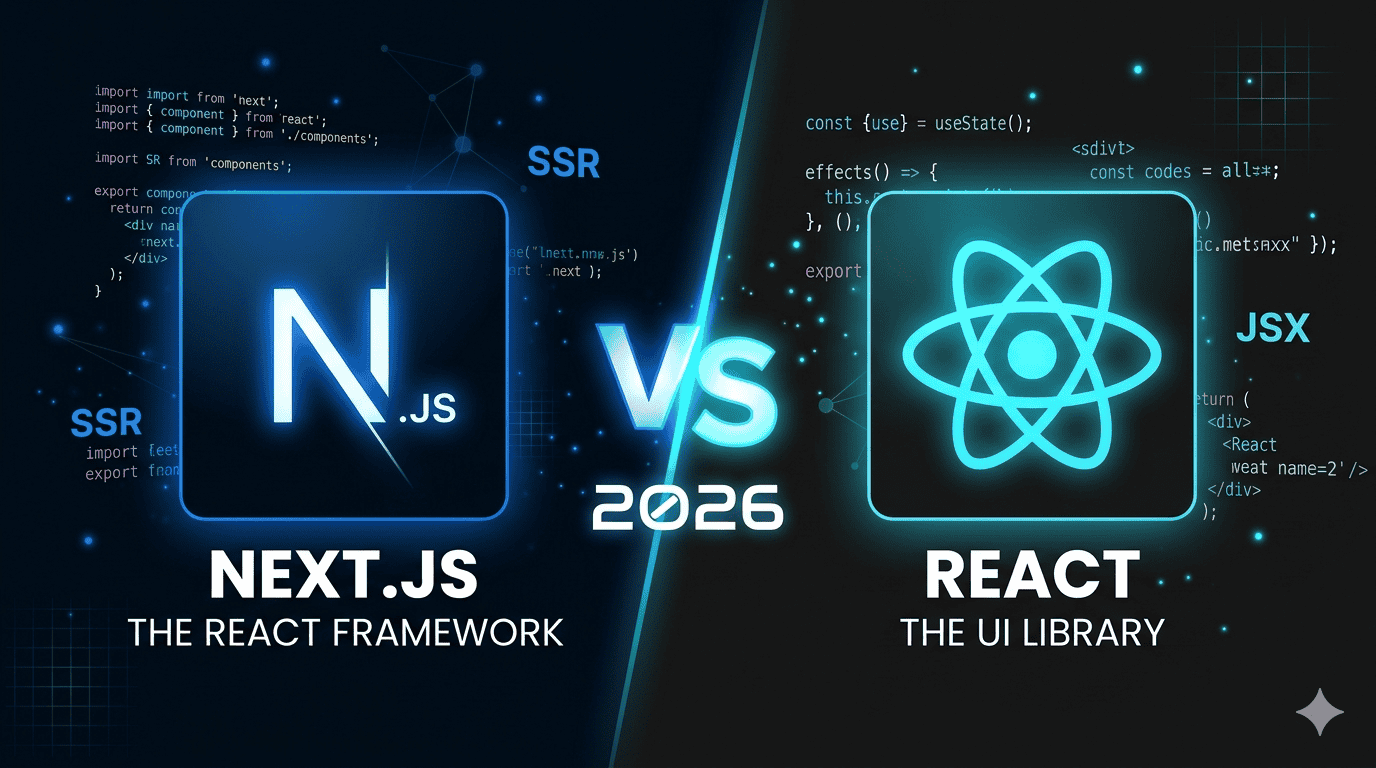
📌 What Are React Server Components in Next.js?
⚡ Why Use Server Components?
- ✅ No extra JavaScript in the client bundle
- ✅ Direct access to backend logic and databases
- ✅ Faster page loads and better SEO
- ✅ Seamless integration with Next.js App Router
🧠 Server vs Client Components (Side-by-Side)
| Feature | Server Component | Client Component |
|---|---|---|
| Where it runs | Server (Node.js) | Browser |
| Can access database? | ✅ Yes | ❌ No (needs API calls) |
| Supports interactivity? | ❌ No | ✅ Yes (useState, useEffect) |
| Shipped to browser? | ❌ No | ✅ Yes (adds to bundle size) |
| How to define | Default in App Router | Add "use client" at top |
💡 Real Example Using Next.js App Router
Let’s build a simple blog page that fetches data using a Server Component.
📁 File: app/page.tsx
import { getPosts } from "@/lib/db";

export default async function HomePage() {
  const posts = await getPosts(); // Fetching data on the server
  return (
    <div>
      <h1>My Blog</h1>
      {posts.map((post) => (
        <p key={post.id}>{post.title}</p>
      ))}
    </div>
  );
}
This Server Component will not be sent to the browser and handles data securely on the server.
For a deep dive into React Server Components, check out the official React documentation.
Next.js 13’s App Router docs explain how Server Components are integrated at the framework level.
🎮 When to Use Server vs Client Components?
- Use Server Components: For static or dynamic data rendering (blogs, product listings, dashboards)
- Use Client Components: For interactivity (modals, form inputs, toggles)
❓ FAQs on React Server Components
1. Can I use useEffect in Server Components?
No. Server Components do not support lifecycle hooks like useEffect or useState. You must mark the component as "use client" to use them.
2. Are Server Components good for SEO?
Yes. Since the HTML is rendered on the server, it’s excellent for SEO and page performance.
3. Do Server Components replace getServerSideProps?
In Next.js App Router, yes — data fetching now happens directly in Server Components instead of getServerSideProps.
📝 Conclusion
React Server Components in Next.js represent a huge step forward in web performance and DX (Developer Experience). By separating the interactive UI into client components and rendering static or data-heavy pages on the server, your apps can become faster, smaller, and easier to manage.
If you’re using Next.js 13+ with the App Router, you’re already using RSCs by default. Now you know how to use them wisely!