the answer lies in the JavaScript Ecosystem History. Today’s post breaks down how JavaScript
grew from a beginner scripting language into the most powerful ecosystem on the internet.
Why Learn JavaScript Ecosystem History?
Before diving deep into tools like React, Node.js, or Next.js, it’s important to understand where JavaScript came from,
why it became so dominant, and how the ecosystem evolved. Knowing the history helps you learn faster and avoid confusion
when exploring modern frameworks.
The Beginning: How JavaScript Started
JavaScript was created in 1995 by Brendan Eich in just 10 days. It was originally designed to make web pages
interactive—simple things like alerts and button clicks.
- HTML → structure
- CSS → design
- JavaScript → interaction
At this time, JavaScript was slow, unorganized, and mainly used for small scripts. But everything changed when web
browsers started improving.
The Rise of Browsers and The V8 Engine
In 2008, Google released the V8 JavaScript engine inside Chrome. This engine made JavaScript extremely fast.
This is a key moment in the JavaScript Ecosystem History because it transformed JavaScript from
a toy language into a high-performance technology.
Example:
Just like a normal cat suddenly evolving into a tiger—JavaScript went from slow scripts to powering full applications.
Node.js Changes Everything
In 2009, Ryan Dahl used the V8 engine to create Node.js. This allowed JavaScript to run outside the
browser for the first time.
Impact:
- Developers could write backend code in JavaScript
- NPM ecosystem started growing
- Full-stack JavaScript became possible
The 2010s: Modern JavaScript Takes Over
Once Node.js became popular, big companies started building frameworks and libraries:
- Angular – Google (2010)
- React – Facebook (2013)
- Vue – Evan You (2014)
- Svelte – Rich Harris (2016)
Each tool focused on one goal: building fast, interactive user interfaces.
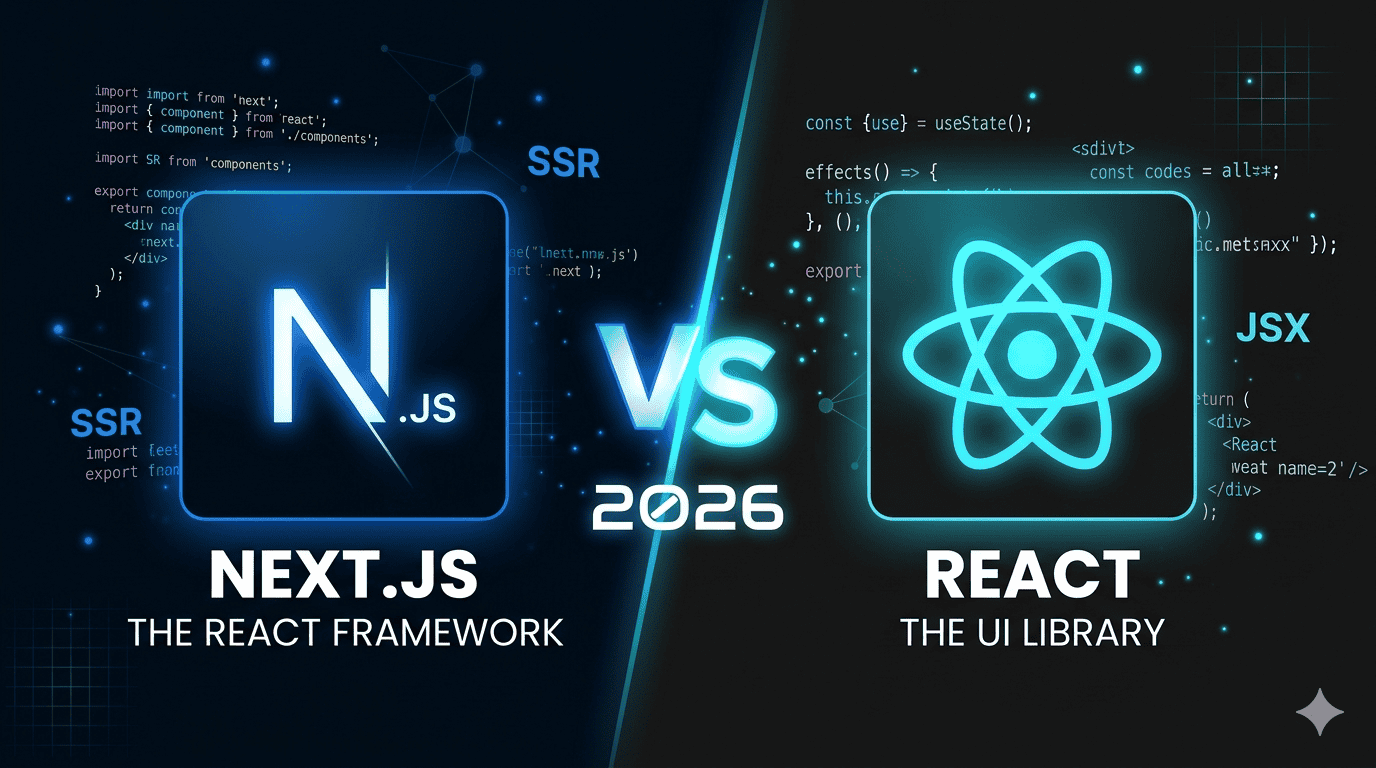
Framework vs Library
Understanding the difference helps you know why Next.js exists:
- Library (e.g., React): You control the code structure.
- Framework (e.g., Next.js): The framework controls structure; you follow its rules.
Why Next.js Was Born
Next.js was created by Vercel to solve real problems found in React:
- SEO challenges
- Routing complexity
- Performance optimization
- Server-side rendering
Today, Next.js is the standard way to build production-ready React apps.
Conclusion: Why This History Matters
Understanding the JavaScript Ecosystem History helps you learn faster and make smarter decisions as
you explore React, Node.js, and Next.js. When you know how JavaScript evolved, everything else becomes easier to understand.
Takeaway: JavaScript didn’t just grow—it exploded. And today, it powers the entire modern web.