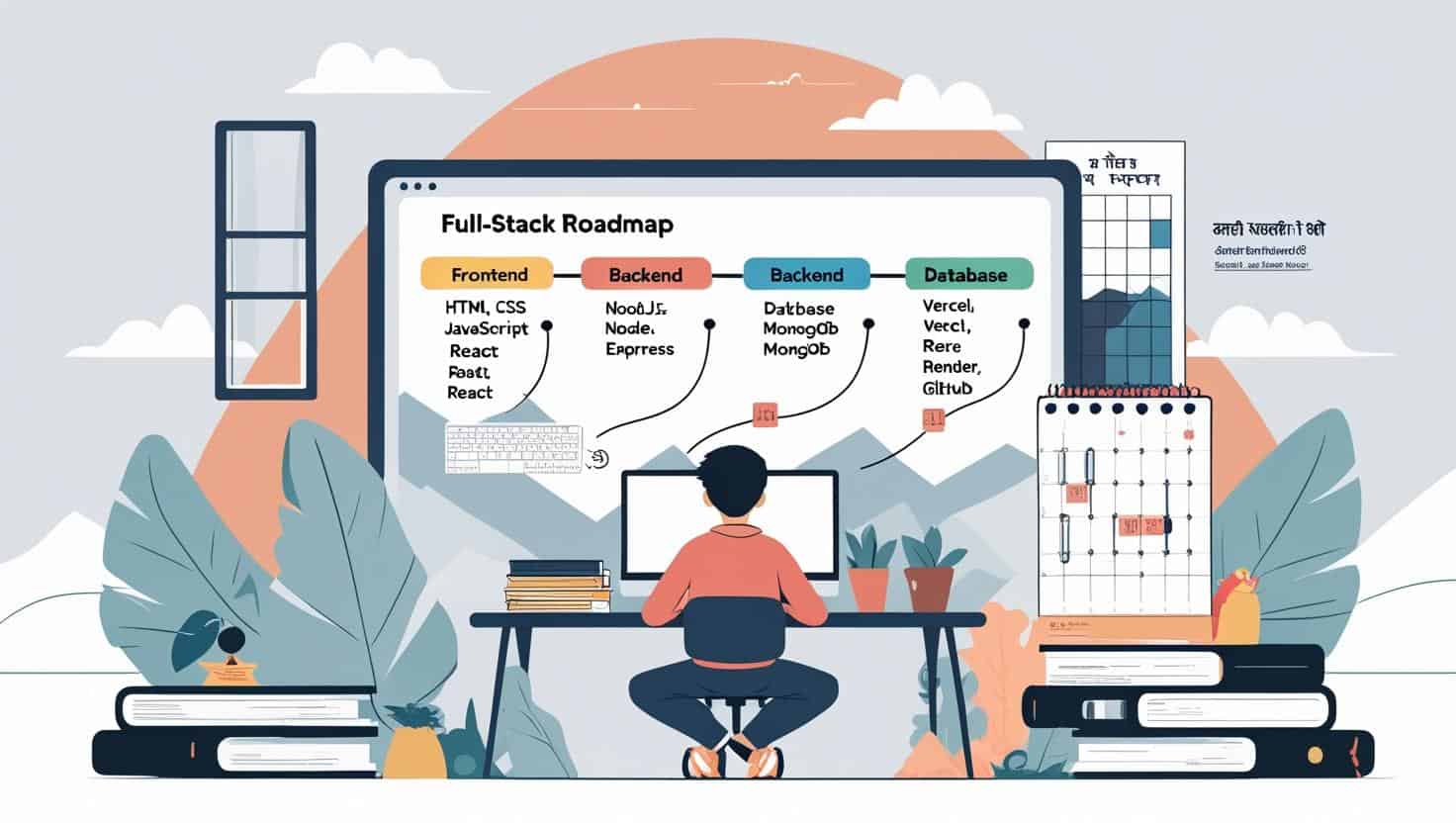
Full-Stack Roadmap for Nepali Developers
This Full-Stack Roadmap for Nepali Developers is designed to help aspiring developers in Nepal understand the key skills needed to become successful full-stack web developers. The roadmap covers both frontend and backend technologies, guiding Nepali students step-by-step through the process of mastering full-stack development. By following this full-stack roadmap for Nepali developers, beginners and intermediate learners alike can build a strong foundation and confidently work on real-world projects. Whether you are starting from scratch or want to enhance your skills, this guide provides practical advice tailored specifically for Nepali developers aiming to excel in full-stack web development.
- Introduction
- Why Full-Stack Development is in Demand
- Learn Frontend Development
- Master Backend Fundamentals
- Understand Database & Authentication
- Build Real-World Projects
- Get Ready for Jobs & Freelancing
- FAQs
- Conclusion
Complete Full-Stack Developer Roadmap for Nepali Learners
Full-stack developers are highly in demand in Nepal due to their flexibility. You can work on both client-side (frontend) and server-side (backend) of web applications.
- Startups love full-stack devs who can handle everything.
- Freelance clients want one person who can do it all.
- Remote jobs mostly ask for full-stack skills.

1. Start with Frontend Development
The frontend is what users see in a browser. To begin your journey, learn these in order:
- HTML – structure of web pages
- CSS – styling the web pages
- JavaScript – adding interactivity
- Responsive Design – using CSS Flexbox/Grid
- Framework: Learn React.js
Tools You’ll Need
- VS Code editor
- Google Chrome + DevTools
- Git & GitHub for version control

2. Move to Backend Development
The backend handles data, logic, and APIs. Here’s what to focus on:
- Node.js – JavaScript runtime for server-side
- Express.js – popular backend framework
- RESTful API – for frontend-backend communication
- Authentication & Authorization – login systems
Important Concepts
- Routing and middlewares
- Error handling
- Async/Await and Promises
3. Learn Databases & Authentication
Data is the backbone of any web app. For full-stack work, learn:
- MongoDB (NoSQL) or MySQL (SQL)
- How to design schemas and collections
- Secure login systems (JWT, OAuth, Sessions)
Tools
- MongoDB Atlas (cloud DB)
- Postman (API testing)
- Prisma or Mongoose (ORM/ODM)
4. Build Real-World Projects
Now that you know frontend + backend + DB, start building!
Project Ideas for BCA Students
- To-Do List App with login system
- Blog platform (like WordPress-lite)
- College Event Management System
- Job Board using MERN Stack
Tip: Host on GitHub, use Netlify or Render for deployment, and create a portfolio site.

5. Freelancing and Job Preparation
Once you have built 2–3 real projects, you’re ready to earn:
How to Get Clients or Jobs
- Create a GitHub portfolio
- Post projects on LinkedIn and Facebook
- Apply on Upwork or CodeRush Nepal
Where to Learn More
- Roadmap.sh (global resource)
- BCA Project Ideas (internal)
FAQs
What is the best full-stack stack for Nepali students?
MERN Stack (MongoDB, Express, React, Node) is most recommended because of job demand and JavaScript-based ecosystem.
How long does it take to become a full-stack developer?
With daily practice, most students in Nepal can become job-ready in 6–8 months.
Can I become a full-stack dev without a CS degree?
Yes! Many Nepali freelancers and developers have learned full-stack from YouTube, blogs, and projects — degree is optional.
Conclusion: Your Full-Stack Journey Starts Now
Learning full-stack development as a Nepali student is not just possible — it’s practical and profitable. Whether you’re a BCA student or passionate self-learner, follow this roadmap, build projects, and share your journey online. You can earn, freelance, or land remote jobs from home.
👉 Start today. Bookmark this guide. And don’t forget to comment below if you need help!